
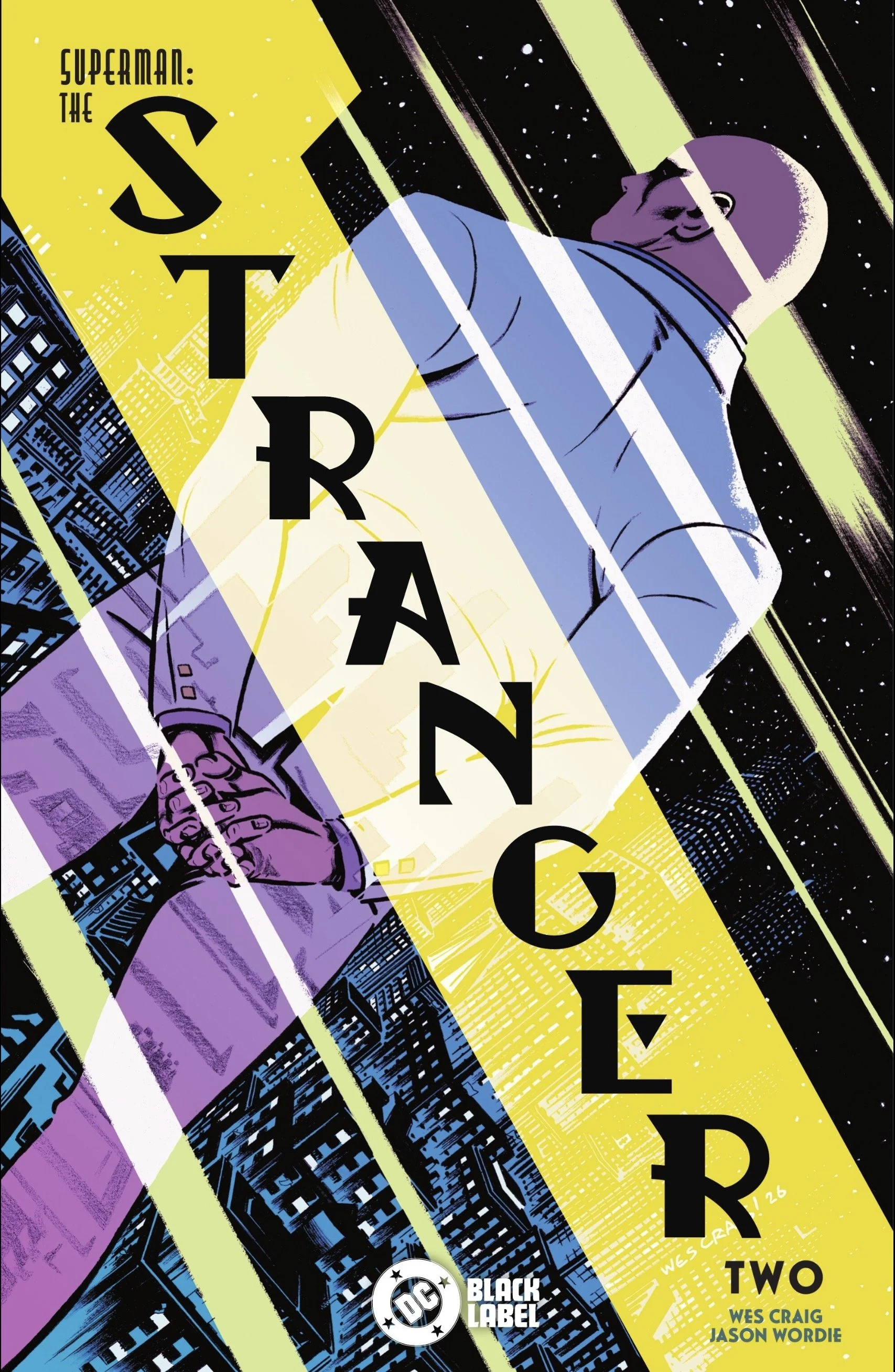
Superman: The Stranger #2
Writer/Artist: Wes Craig
Colorist: Jason Wordie
Publisher: DC Comics, Black Label Imprint
In the 1930s, a young Clark Kent is unsure of himself and the direction of his life—both as himself and as his caped strongman alter ego...
Being Human
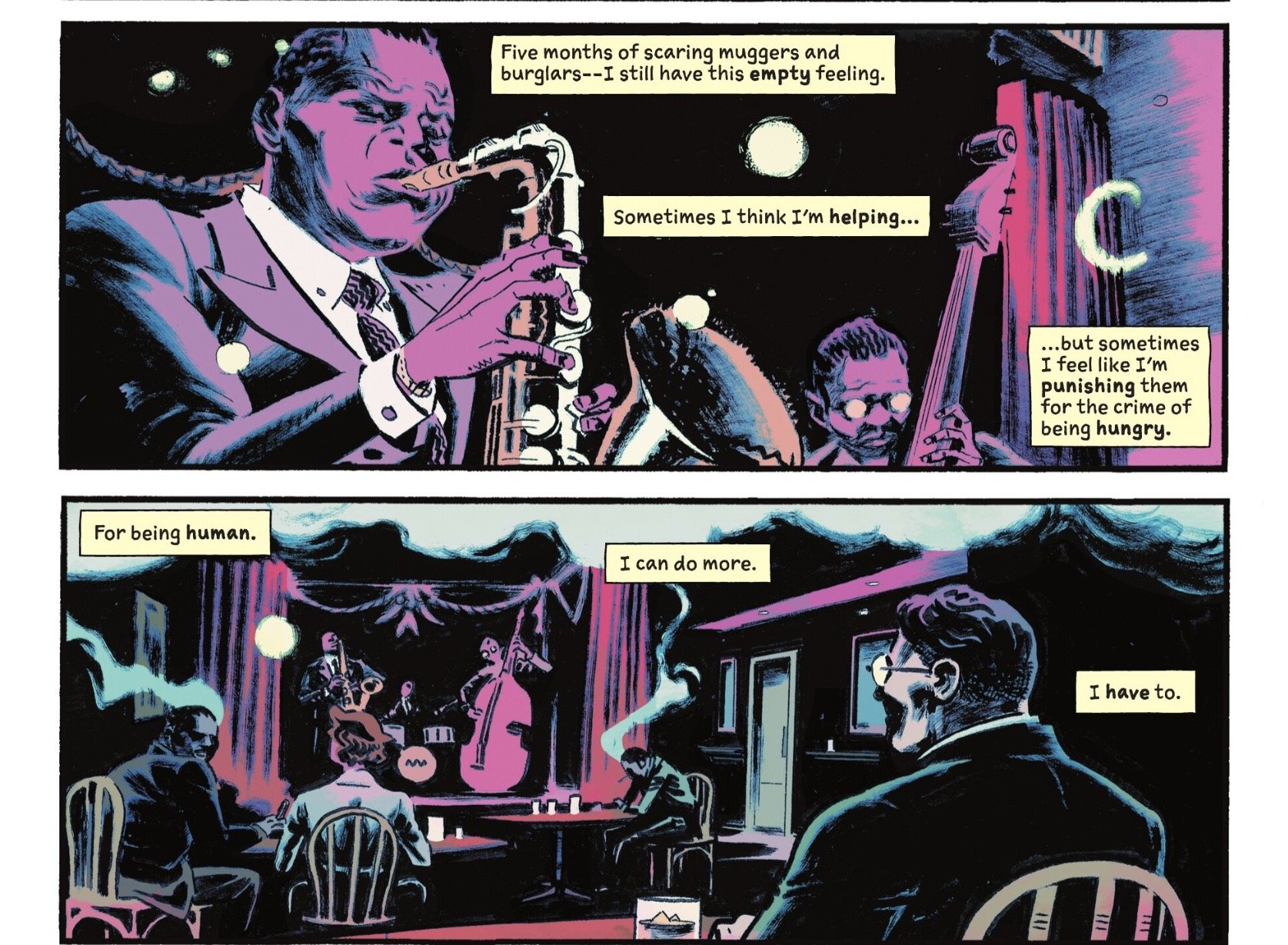
For the past five months, Clark Kent has been the Daily Planet's janitor and a would-be cub reporter by day; then at night he suits up in his red-and-blue strongman's outfit and helps those who can't help themselves. He's been scaring muggers and burglars, saving people, but he still feels empty inside like he's not doing enough. Like he's punishing the would-be criminals for the crime of being poor and hungry.
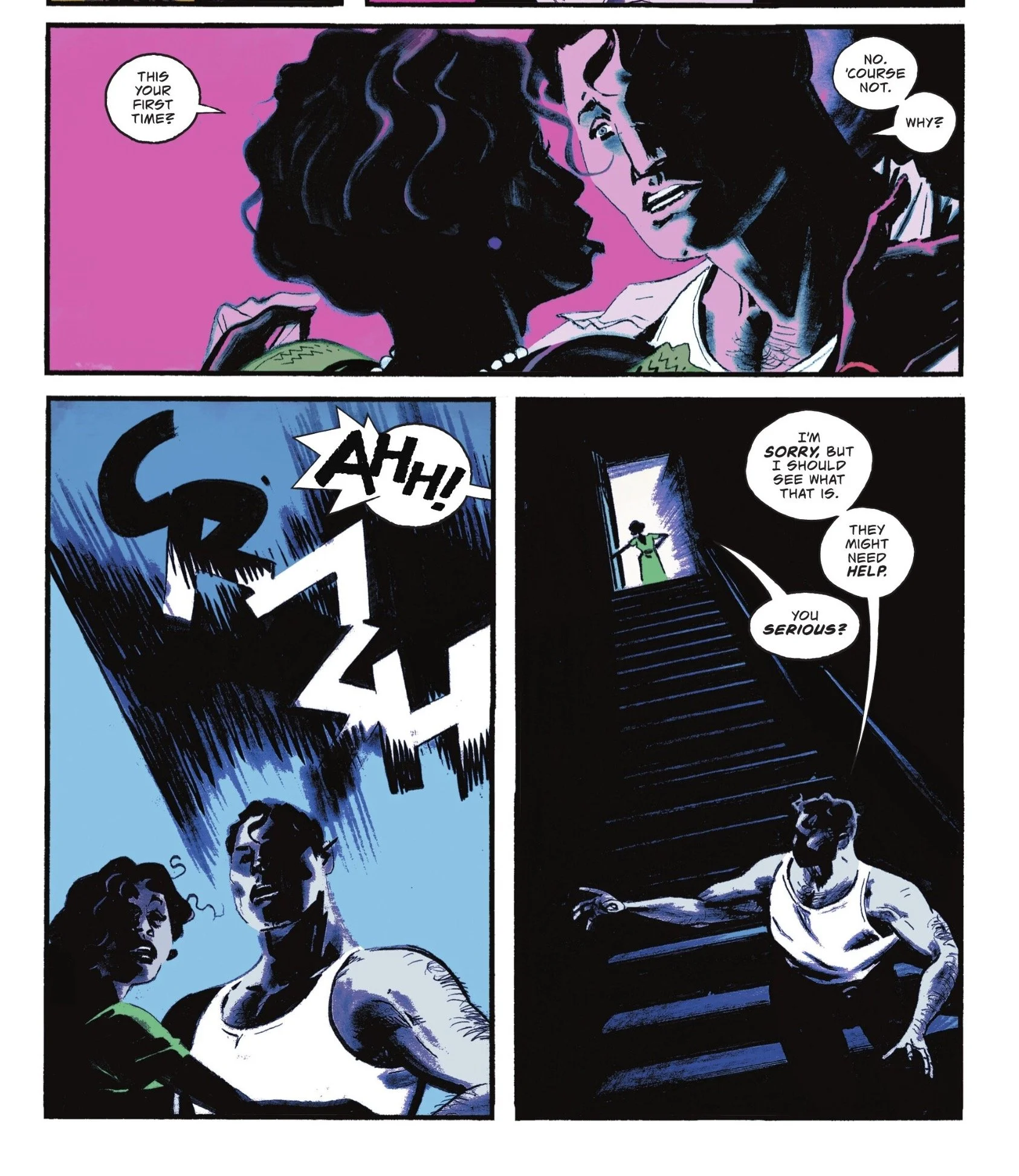
Hanging out at a jazz club, Clark meets a beautiful singer and takes her back to his place. Unfortunately, his inexperience combined with a cry for help outside kills the moment. So Clark goes to bed alone once again.
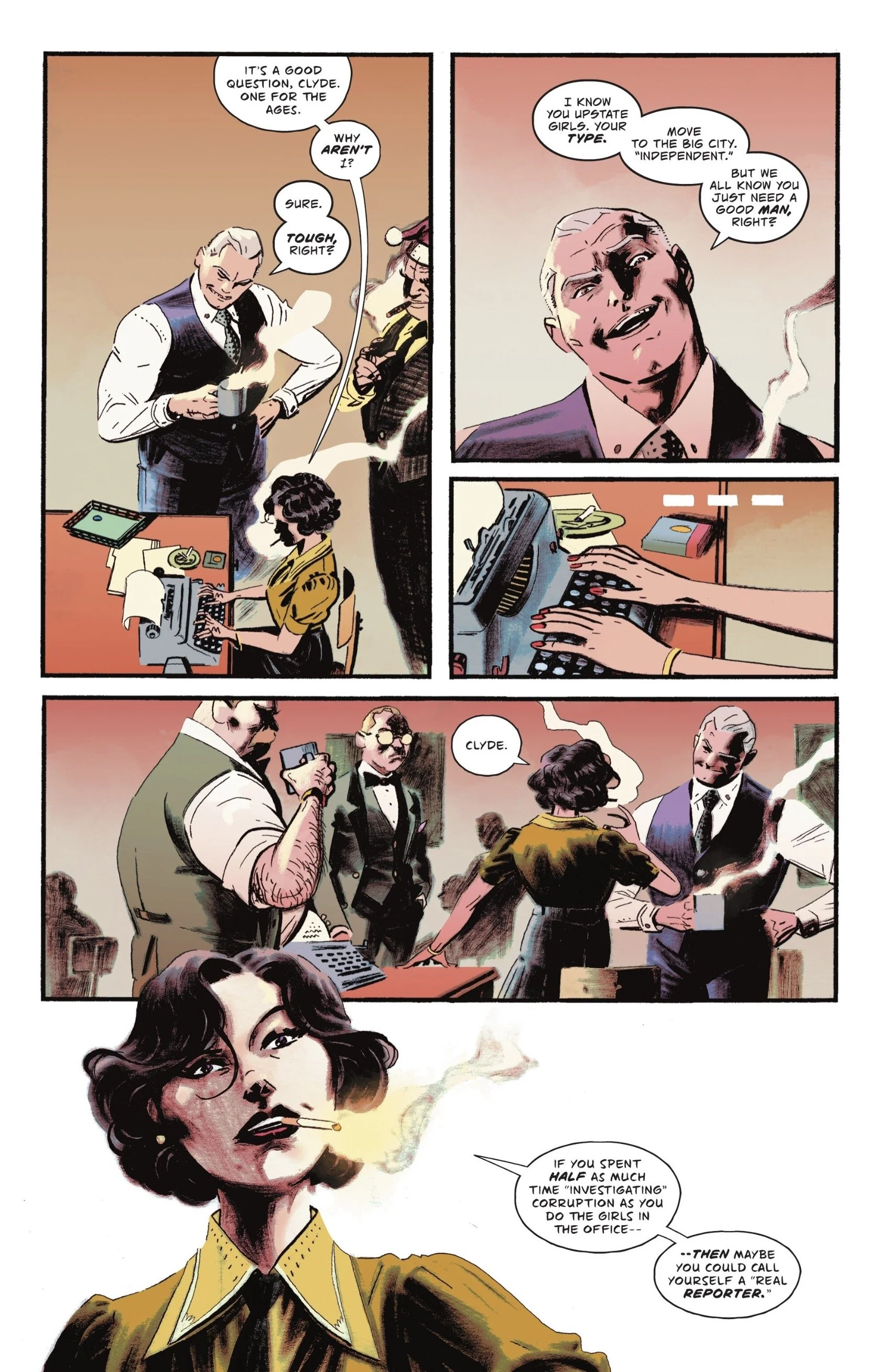
At the Daily Planet, Lois Lane defies the "boys club" atmosphere around her and continues to work on real, hard-hitting news. Like the disappearance of a labor leader who's known for uniting workers’ groups, and the real estate developer who's presumed to be responsible. Maybe there really is more that Clark can do...
Elsewhere, billionaire businessman Lex Luthor continues building his "think tank" of the most brilliant minds from both America and abroad, for purposes as-yet unknown...
Stand Up For the Little Guy
This issue is a fascinating character study of a much more old-school version of Superman. This issue again uses the narrative device of a letter written by Clark to an unnamed recipient. I'm curious to find out who it is he's writing to, since we've established that he grew up in an orphanage and has no family.
The differences between Clark Kent and Superman are more pronounced here than they have been in many years. As Clark, he's quiet, timid, unsure of himself, and tends to fade into the background wherever he goes. When the jazz singer comes on to him, you can feel how hungry he is for human contact, but he has no clue how to actually go about it. When things are getting hot & heavy, and he pulls away to run after a cry for help, you can almost feel the relief and frustration coming off him in equal parts.
Fortunately, Clark may soon meet his match in the form of one Lois Lane. She's her usual determined and tough-as-nails self here, but now she's an independent woman in a world where men expect her to be anything but. Clark is going to be so drawn to her, and she's going to just steamroll him—the poor man...
For now, though, she's just an unknowing source of information for the "vigilante strongman." Here, thanks to her work, Clark is able to confront the real estate developer who isn't interested in anything but his bottom line (wait, is this set today? I thought it was the 30s?) and put the fear of God into him. If there were a Batman in this world, he'd approve of Clark's tactics here, I think.
In the middle of it all, Clark keeps having these dreams. There's fire, and a voice that he can't make out at first. When he can finally understand it, it says, "You are the Super Man. You can rule them all." So clearly this is not going to be a warm and fuzzy version of Krypton. I feel like we just did a variation on this in James Gunn's Superman movie not that long ago, but I'm keeping an open mind that this will bring something different to the table. This series has presented a very interesting and unique take on Superman so far, so it's earned the benefit of the doubt.
I can't close this out without mentioning Lex Luthor. He feels like a modern-day billionaire tycoon transplanted into the 1930s. He talks about how America should be for Americans, not foreigners, but then quietly recruits foreign scientists to his cause. He gives them speeches about how he too is from another country—well, his ancestors are. He's a hypocritical son of a bitch. And much like the real estate developer earlier in the issue, he's all about his bottom line, first and foremost. So even if the rest of this series falls completely apart, which I doubt it will, it will still be cathartic to see Lex get punched in the face a few times.
A Man Apart
Wes Craig once again brings us an old-school Superman with modern trappings, and it works incredibly well. On the writing side, he keeps the issue paced well and focused squarely on Clark (except for the Lex parts, of course). He's got a strong take on Clark Kent, a man who knows he can tear down a building with his bare hands but barely knows how to talk to people. A man who lives in a tiny apartment with spartan furnishings, and spends his nights running around in a strongman outfit and scaring petty criminals. A man who knows he's meant for more, but doesn't know what that means.
On the art side, he gives everything that Fleischer cartoon style, but in a way that is unmistakably his own. His facial expression work in particular is very strong and effective; you can tell so much about these characters just by their faces. When there is action, it's well-staged and exciting to watch—Clark really does channel Batman a bit in his scenes with the real estate developer, and it's compelling stuff. In the quieter moments, Clark is usually hunched over, hiding in the background. When he's in his tiny apartment, he looks like an adult trying to sleep in a kid's bed. He literally doesn't appear to fit in anywhere.
Jason Wordie's colors give everything a painted feel that makes the whole book look very unique. He's got heavy use of shadows in some scenes, and others, like the jazz club, are heavily shaded in a single color like purple. When Clark is suited up, the familiar red-and-blue suit stands out no matter what environment he's in, adding to his larger-than-life look. As for Lex Luthor, his familiar white suit is almost a uniform of his own, making him similarly stand out against everything around him. It makes the two men almost look like paragons in their own right, adding excitement to their inevitable collision.
Looking for a Cause
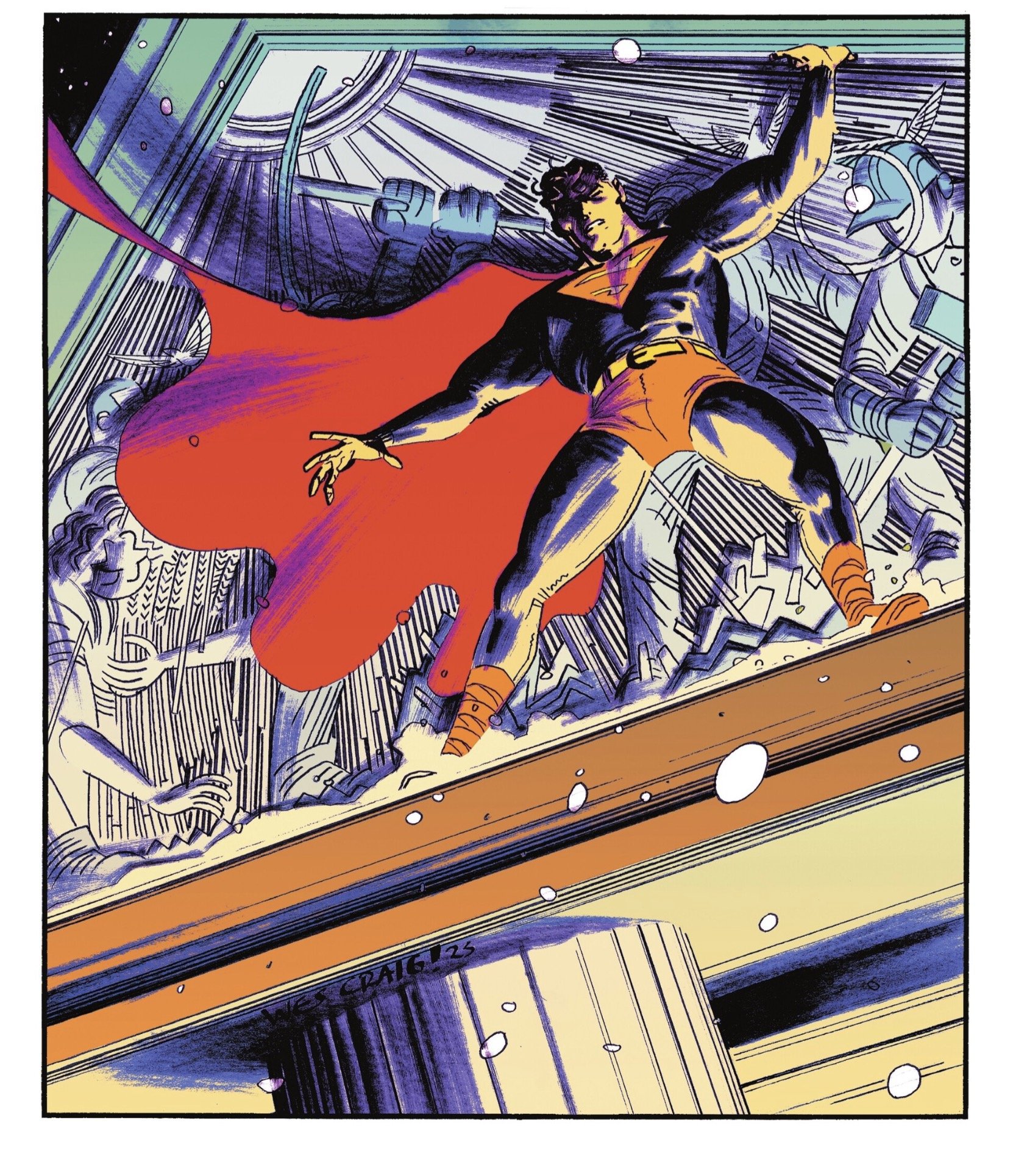
Superman: The Stranger #2 is another terrific installment of a title that brings us a very different take on Superman. The 1930s setting is an important part of the story and not just window dressing, and this version of Clark Kent is one that you can't help but feel for. He's lonely and awkward, and that's not going to be helped by the dreams he keeps having that seem to be pushing him in a more "conqueror" direction. He's got a long way to go until he becomes like the Superman we know and love today, but it's fascinating watching him find his way.